
Skip to content

BIZ CONTEXT

Give industrial data
real-world meaning

Connect data to the equipment, processes, locations, documents,
organizations, and business relationships it represents with Biz Context.

Data without context is just data

A tag name may make sense to an engineer who has worked at a facility for 20 years. It means almost nothing to an AI model. Biz Context captures the relationships that allow both people and machines to understand what industrial information actually represents.

How Biz Context works


1
Identify

Find common assets, equipment, processes, locations, and entities across different systems.

2
Match
Resolve different names and identifiers that refer to the same real-world thing.
3
Connect
Create relationships between equipment, data, documents, processes, systems, and business information.
4
Use

Make that context available to applications, analytics, search, copilots, and AI agents.

What does Biz Context make possible?

connect
Faster troubleshooting
Start with an asset or problem and quickly find related operational, engineering, and maintenance information.

data flows
Better Reliability Decisions
Understand equipment behavior alongside maintenance history, process conditions, and asset relationships.
Connected Process Safety
Link engineering diagrams, safeguards, equipment, procedures, operating data, and other safety-critical information.
compass
Enterprise Search With Meaning
Search by the equipment, process, facility, or business concept you actually care about—not simply by filenames or database fields.

What makes us different?

DeepIQ identifies the equipment, processes, locations, documents, measurements, and business information across your systems and connects the relationships between them.
The result is a governed industrial knowledge graph a connected representation of your operation that people, applications, analytics, and AI can understand.
You don't need to know what a knowledge graph is to use it. You simply get information that understands how your operation fits together.
BIZ CONTEXT

Data without relationships tells only part of the story

Imagine you're investigating a pump problem. The information you need may include:

  • Live operating data from the historian
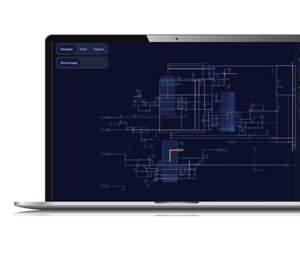
  • The pump on a P&ID
  • Maintenance history
  • Work orders
  • Alarm events
  • Equipment specifications
  • Operating procedures
  • Inspection records
  • Spare parts
  • Production impact

Those systems don't automatically know they're talking about the same piece of equipment. Biz Context creates those connections.

screen
bg-office-meeting-table-unsplash
“DeepIQ DataStudio has enabled real-time integration between our IT and OT systems, cutting our time to insights from days to minutes. It is a key enabler for how we operate and make decisions.”
Cole NortonSenior VP of IT, Grapevine Energy Holdings

Frequently asked questions

What is DeepIQ Biz Context? DeepIQ Biz Context connects industrial data to the equipment, processes, locations, documents, and business relationships it represents. It brings information from different systems into a shared operational context, helping teams understand how their data relates to real-world operations.
How is Biz Context different from traditional data integration? Traditional data integration connects systems and moves information between them. Biz Context goes further by identifying relationships across that information. For example, it can connect a pump’s historian tag, maintenance records, engineering drawings, and asset information so teams can understand them as part of the same equipment.
What is an industrial knowledge graph, and how does Biz Context use it?

An industrial knowledge graph is a connected model of assets, processes, data, and their relationships. Biz Context uses this approach to organize industrial information around how your operation actually works, making it easier to find relevant information, analyze dependencies, and give AI the context it needs.

Can Biz Context work with our existing industrial and enterprise systems?

Yes.

Biz Context is designed to work with information from existing systems, including historians, SCADA, maintenance applications, ERP platforms, engineering documents, P&IDs, and enterprise databases. It connects information across these sources without requiring organizations to replace their existing infrastructure.

How does Biz Context help improve industrial AI? Industrial AI needs more than access to raw data—it needs to understand what that data represents and how it relates to the operation. Biz Context provides relationships between equipment, processes, measurements, documents, and business information, helping AI assistants and agents retrieve more relevant information and generate answers grounded in operational context.

SEE BIZ CONTEXT IN ACTION

This is the context layer behind industrial AI.

See how Biz Context connects everything together.